src='https://pagead2.googlesyndication.com/pagead/js/adsbygoogle.js?client=ca-pub-2513966551258002'/> Rightways Infolinks.com, 2618740 , RESELLER

Pages

Share This

Deepseek https://www.deepseek.com/./深度求索 DeepSeek | 深度求索 https://askaichat.app/chat

Monday, September 21, 2026

When surgery may not be the only option


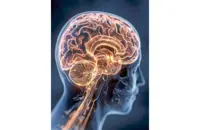
A digital illustration of the human brain. Advances in imaging, medication and minimally invasive proceduneuroscience res have expanded treatment options, allowing doctors to choose the most appropriate approach for each patient. — Photo from 123RF

I treatments now available, patients may understandably wonder whether the goal should always be to avoid surgery.

Dr Arvin stressed that the answer depends on the individual patient, noting that if assessment shows intervention is not necessary, it may not be recommended.

For example, a patient may have relatively minor neurological deficits and imaging may show an occlusion that does not warrant an invasive procedure.

Conversely, when a significant blockage threatens a large area of the brain, intervention may offer substantial benefit in an appropriately selected patient.

The decision therefore goes beyond simply asking which treatment is less invasive.

“It can be easy to get a diagnosis. It may not be as easy to find a good solution,” Dr Rishikesan pointed out.

Doctors must consider the likely benefits of treatment against its risks, as well as the patient’s overall condition, age, functional status, circumstances and priorities.

“Sometimes, doing something carries a risk, and is the risk worth it?” he said.

“These are life questions that need to be considered.”

In some situations, the best course is clear. In others, the balance between intervention and conservative treatment is less certain.

This is where shared decision-making becomes particularly important. Rather than focusing only on what can technically be done, the neurological team considers what should be done for that particular patient.

“Communication is key,” said Dr Rishikesan, “so that everyone understands the risks, benefits and possible outcomes clearly before making a decision.”

A team around the patient

Modern neuroscience increasingly depends on collaboration.

A patient with an acute neurological problem may require input from emergency physicians, neurologists, interventional radiologists, neurosurgeons, radiologists, critical-care specialists and rehabilitation professionals, depending on the condition.

The same teamwork continues beyond the initial treatment.

Physiotherapists, occupational therapists, speech and language therapists, nurses and other rehabilitation professionals may play important roles in helping patients regain function and return to everyday life.

As neuroscience continues to evolve, specialists have a growing range of approaches to consider, with the patient’s condition and circumstances guiding the decision-making process.

Recognising neurological symptoms and seeking medical attention promptly remain important when managing acute neurological conditionitions.

Follow us on our official WhatsApp channel for breaking news alerts and key updates!

Others Also Read


Friday, September 11, 2026

Bill Gates: We are not really for AI

 Gates, the Microsoft co-founder, said he saw three main risks arising from the fast deployment of AI. — AFP

WASHINGTON: Bill Gates warned on Aug 26 that the world is dangerously unprepared for the upheaval brought by artificial intelligence (AI), with the technology destroying jobs and threatening human connection, especially for young people.

In a nearly 6,000-word essay published on his blog, the Microsoft co-founder said the shift into the AI era will rank among the most turbulent periods in human history and that no one has produced a credible plan for managing it.

His stance will draw significant pushback from many in Silicon Valley and the Trump administration who blame "doomer" attitudes among some tech leaders for giving the AI revolution a bad reputation.

"AI will either be the greatest equaliser ever invented, or the worst source of injustice," wrote Gates, 70, who now chairs the philanthropic foundation that bears his name.

"There is no plan to ease the entry into the AI era," Gates said, adding that he would likely support one if it existed.

"However, I don't think that's going to happen. The geopolitical and economic incentives are pushing too hard to go full speed ahead," he warned.

Gates said he saw three main risks arising from the fast deployment of AI.

The first is permanent job destruction. Gates insisted comparisons to the shift from farm work to office work were misleading, as that transition unfolded over generations and created roles that still required human thinking.

AI can substitute for thinking itself, he warned, hitting law, medicine, customer service, software and manufacturing within roughly a decade.

Entry- and mid-level positions are the most exposed, Gates said, leaving young people entering a labour market with far fewer openings.

Blue-collar work will follow as robots become cheaper, with the construction and hospitality sectors feeling pressure by the end of the decade.

Gates suggested that some jobs should be set aside for humans, even if AI can do them better and more cheaply.

The second risk is that AI hands new capabilities to bad actors.

Gates said cybersecurity specialists he knows are alarmed that attackers are gaining ground faster than defenders can patch weaknesses.

Hospitals, banks, water systems and power grids are all exposed, he said.

The third area of risk concerns children and human relationships.

Citing research, Gates said AI chatbots that never challenge or frustrate users risk becoming addictive and denying people the chance to build social skills.

AI bots "rob us of the lessons we learn from connecting with other people," he wrote.

Gates acknowledged he retains deep financial ties to the technology industry, saying investment profits will flow to his foundation, which plans to spend its remaining US$200bil (RM805.4bil) over the next two decades.

The essay comes months after Gates was interviewed by the House Oversight Committee over his ties to the late sex offender Jeffrey Epstein, telling lawmakers in June that the association was "a grave error in judgment." 

Related stories:

Monday, September 7, 2026

Furnished Rooms for rent RM350 / month


https://www.sheryna.my/furnished-rooms-for-rent-bukit-jambul-839909#google_vignette

Description
Located in quiet environment, amidst rolling hills, surrounded by lush greenery, cool mountain breezes. Address : Desa Daya, Persiaran Bukit Jambul, 11900 Bayan Lepas, Penang. Google map : https ://goo. gl/maps/NuvY98s9dy5ss8KC7 Walking distance to Hotel Equatorial, USM Research Centre, INUKubator Universiti i2U, Inti International University College, Penang Golf Club, Bukit Jambul Millionaires Row, Bukit Jambul Complex, etc. Minutes drive to Bayan Lepas Free Industrial Zone (FIZ), Relau Town, Golden Business Trinangle, Setia sPICE (Sub-terranean Penang International Convention and Exhibition) Multimedia Hubs : The OneWorld, Suntech, Sunshine Square, Giant Supermarkets, USM (The Science University Malaysia), International Schools, Community Colleges, Bayan Baru, Penang Bridges, Airport, etc. Contact owner : Richard : mobile no. +6 012-4860539, Whatsapp user